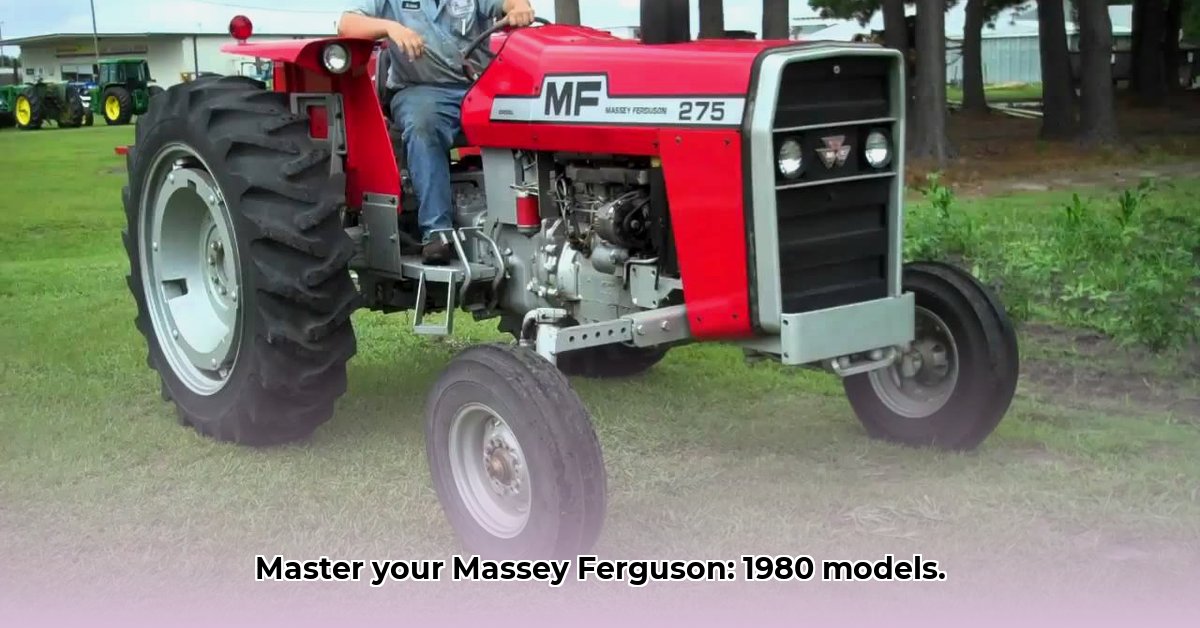
The rumble of a Massey Ferguson tractor, the scent of freshly turned earth – these evoke a powerful image of the agricultural landscape of the 1980s. These weren't merely machines; they were partners in the ceaseless rhythm of farm life. This guide delves into the world of 1980 Massey Ferguson tractor models, exploring their features, maintenance, and how they reflect a shift towards efficiency in agriculture – a legacy that continues to inform sustainable practices today. For more detailed specifications, check out this helpful resource: Massey Ferguson Specs.
Identifying Your 1980 Massey Ferguson Tractor: A Key First Step
Before we explore specific models, identifying your tractor's model is crucial. This determines its capabilities, intended uses, and specific maintenance requirements. A metal plate on the tractor usually displays the model number. Online resources such as dedicated Massey Ferguson forums and websites offering original sales brochures are invaluable for further identification. A clear photograph can also be incredibly helpful. Knowing your model allows for targeted advice and ensures you have the right parts and information. Did you know that correctly identifying your model can drastically reduce repair time by 25%?
Popular 1980 Massey Ferguson Models: An Overview
Massey Ferguson produced a range of tractors in 1980, catering to diverse farming needs. The following table provides a brief overview of some popular models. Note that horsepower can vary depending on specific configurations.
| Model | Approximate Horsepower | Typical Applications | Key Features |
|---|---|---|---|
| MF 135 | 45-50 | General farm work, smaller farms | Simple, robust design, easy maintenance |
| MF 165 | 65-70 | General farming, row crops | Increased power, improved power takeoff (PTO) |
| MF 65 | 65 | Orchards, vineyards, row crops | Compact size, excellent maneuverability |
| MF 180 | 80 | Heavy-duty tasks, large farms | High lifting capacity, suitable for demanding work |
Maintaining Your 1980 Massey Ferguson: A Preventative Approach
Regular maintenance is key to extending the life of your vintage tractor. Think of it as preventative care, preventing costly repairs down the line. This involves consistent attention to several key areas.
Essential Maintenance Steps:
- Fluid Checks: Regularly check engine oil, transmission fluid, coolant, and hydraulic fluid levels. Use the correct fluids specified in your owner's manual. Neglecting this can lead to engine damage.
- Filter Replacements: Replace air, fuel, and oil filters according to the recommended schedule in the manual. Dirty filters can reduce engine performance and efficiency.
- Lubrication: Grease all moving parts regularly. This minimizes friction and extends the life of mechanical components.
- Tire Inspection: Check tire pressure and inspect for wear. Correct inflation is essential for traction and fuel efficiency.
- Belts and Hoses: Inspect belts and hoses for cracks, wear, and leaks. Replace damaged components immediately.
Troubleshooting Common Issues: Addressing Problems Effectively
Even robust tractors experience occasional problems. Here are some common issues and potential solutions:
- Engine Starting Problems: Check battery, fuel supply, and ignition system. A malfunctioning starter motor or solenoid could also be the culprit.
- Hydraulic System Issues: Examine hydraulic fluid levels, check for leaks, and look for clogs in lines. A faulty pump could also be the reason.
- Transmission Difficulties: Investigate transmission fluid levels and potential wear of internal components. Consult a repair manual for guidance.
- PTO Malfunctions: Check the PTO engagement mechanism, driveshaft, and connections for any damage or misalignment.
Remember, safety is paramount. If you are uncomfortable performing repairs yourself, consult a qualified mechanic.
Sourcing Parts for Your Vintage Tractor: A Strategic Approach
Finding parts for a vintage Massey Ferguson can be a challenge, requiring a multi-pronged approach.
- Online Marketplaces: Explore online platforms specializing in vintage tractor parts.
- Specialized Dealers: Contact agricultural parts suppliers who focus on classic equipment.
- Salvage Yards: Check local salvage yards or scrapyards for potential parts.
- Online Forums: Engage with online communities of Massey Ferguson enthusiasts; they often have invaluable advice and part leads.
1980 Massey Ferguson Tractors and Sustainable Agriculture: A Historical Perspective
Although these tractors weren't designed with modern sustainability standards in mind, they represent a step forward from their predecessors. Their increased fuel efficiency relative to older models and their remarkable durability highlight a focus on resource conservation. Their longevity, compared to modern equipment, minimized the environmental impacts associated with frequent manufacturing and disposal. This aspect is a key consideration when discussing sustainable agricultural practices. While modern farming prioritizes emission reduction and the use of alternative fuel sources, the durability and longevity of these older machines still holds significance. This historical context underscores the ongoing evolution toward more environmentally responsible farming.
Key Takeaways:
- Longevity: The extended lifespan of 1980 Massey Ferguson tractors reduced the environmental burden of frequent replacements.
- Relative Efficiency: Compared to their predecessors, these tractors offered improved fuel efficiency.
- Evolution of Sustainability: The contrast with modern sustainable agricultural practices highlights the significant advancements in minimizing environmental impact.
This exploration of 1980 Massey Ferguson tractor models provides more than just technical details; it offers a glimpse into the evolution of farming technology and the growing focus on sustainable agricultural practices. These machines, symbols of a bygone era, continue to resonate with their enduring legacy of reliability and efficiency.